Overview
Mashua is a climbing perennial tuber crop originating from the Andes of Peru, Bolivia, Ecuador, and Colombia, where it has been cultivated for centuries at high elevations alongside potatoes, oca, and ulluco. It produces brightly coloured edible tubers and vigorous trailing vines with ornamental flowers and leaves.
Mashua is valued for its productivity, resilience, and low pest pressure. It tolerates cool, wet conditions well and can produce large yields with relatively low fertility requirements. The plant forms tubers late in the season as day length shortens in autumn.
Like many traditional Andean crops, mashua is well suited to low-input growing systems and polycultures. The dense foliage suppresses weeds and provides substantial biomass which can be composted or used as mulch.
History and development
Mashua has been cultivated in the Andes for well over a thousand years and was an important staple crop of pre-Columbian agriculture. It belongs to the same family as garden nasturtiums and shares their characteristic flowers and peppery flavour.
In traditional Andean farming systems, mashua was often grown in diverse polycultures alongside maize, beans, potatoes, and other tuber crops. It was valued not only for food production but also for its reputed pest-repellent properties. In recent decades it has gained wider interest among growers in temperate climates due to its ornamental qualities, vigorous growth, and reliable yields in cool maritime conditions.
What you’ve received
You have received mashua tubers. Each tuber is capable of producing a vigorous climbing plant.
Planting
Timing
- Start indoors in spring
- Plant outside after risk of hard frost has passed
- In mild areas, tubers can sometimes overwinter in the ground with mulch protection
Site
- Full sun to partial shade
- Prefers fertile, moisture-retentive but well-drained soil
- Performs well in cool, damp climates
- Avoid very dry or waterlogged sites
Spacing
- 30 – 50 cm between plants, around 1m between rows
- Allow room for climbing or sprawling growth
Method
- Prepare soil by removing weeds and loosening the top 20–30 cm.
- Plant tubers 5–10 cm deep.
- Position with visible buds facing upward if apparent.
- Water well after planting.
- Provide support if climbing growth is desired.
Establishment
- Shoots usually emerge within 2–5 weeks depending on temperature
- Protect young shoots from slugs and late frosts
- Keep soil evenly moist during early growth
- Mulching helps conserve moisture and suppress weeds
Maintenance
Water
- Water during prolonged dry periods
- Consistent moisture improves tuber production
Feeding
- Moderate fertility requirements
- Excess nitrogen may encourage excessive foliage at the expense of tubers
- Compost or well-rotted manure can be incorporated before planting
Support
- Can be grown as a climber on trellises, fences, or netting
- Alternatively allowed to sprawl as a ground cover
- Vines may reach 2–4 metres in length
Weed control
- Weed early while plants establish
- Mature plants usually shade out competing weeds
Harvesting
- Tubers form late in the season as day length shortens
- Harvest after first frost blackens foliage or once tops die back
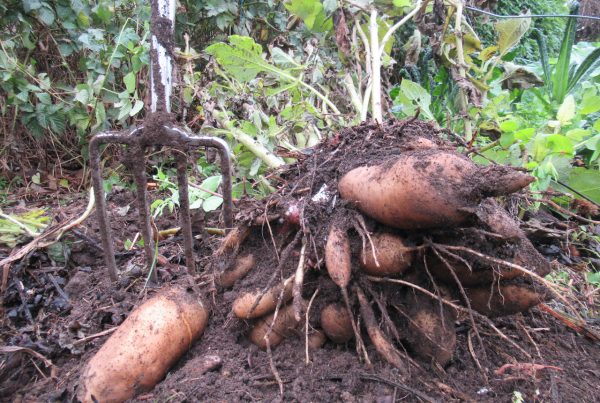
- Carefully lift tubers with a fork to avoid damage
- Smaller tubers can be replanted for future crops
Storage
- Store in a cool, frost-free place
- Allow skins to dry before storage
- Tubers generally store well through winter under cool conditions
Uses
- Edible tubers
- Tubers can be roasted, boiled, mashed, fried, or added to stews
- Flavour ranges from mildly peppery/radish like to earthy depending on variety and preparation
- Sweetness often increases after exposure to frost or sunlight curing
- Young leaves and flowers
- Edible with a peppery flavour similar to nasturtium
- Suitable in salads or as garnish
- Ground cover and biomass
- Dense foliage suppresses weeds and protects soil
- Large quantities of foliage can be composted or used as mulch
- Companion planting
- Traditionally associated with pest suppression in mixed cropping systems
- Useful in diverse polycultures and forest garden systems
Yield expectations
- Productive under cool, moist conditions
- Yields vary widely depending on season length and autumn conditions
- Can produce substantial tuber harvests in long growing seasons
- Tubers multiply readily for future propagation
Additional notes
Climate suitability
- Particularly well suited to maritime climates with mild autumns
- Long autumn growing seasons improve tuber development
Pests and disease
- Generally low pest pressure compared to potatoes
- Young shoots vulnerable to slugs and snails
Frost sensitivity
- Foliage damaged by frost
- Tubers tolerate light frost in soil if heavily mulched
Saving tubers
- Retain smaller healthy tubers for replanting the following season
Summary
- Plant tubers 5–10 cm deep after frost risk passes
- Provide space and/or support for vigorous climbing growth
- Maintain consistent moisture through the growing season
- Harvest late autumn/early winter after foliage dies back
- Productive, ornamental, and well suited to low-input growing systems