A simple low-tech method for cloning and expanding vigorous mushroom species
Cardboard spawn is an accessible way to culture many robust saprotrophic fungi. Species such as Oyster mushrooms (Pleurotus spp.), King Stropharia (Stropharia rugosoannulata), Wood Blewitt (Lepista nuda), and Nameko (Pholiota microspora) readily colonise wet cardboard. These fungi produce strong basal rhizomorphs—dense cords of bundled hyphae—that allow them to outcompete most contaminants on nutrient-poor substrates such as cardboard.
This guide explains why cardboard works, how to prepare it safely, and how to produce your own spawn using the “cardboard burrito” technique. Cardboard spawn can be used to inoculate fruiting substrates (such as straw or woodchip).
Why Cardboard Works
Cardboard consists mainly of cellulose and lignin. For most fungi, this is a very poor food source; however, fast-growing wood-decay species thrive on it. The low nutrient content gives them a competitive advantage over moulds and bacteria that prefer richer substrates.
Using cardboard also allows you to “clone” a mushroom. The stem butt—where the mycelium meets the substrate—contains dense, regenerative tissue. When placed between wet layers of cardboard, this tissue reverts to active vegetative growth, mycellium.
Suitable Fungi
Cardboard spawn works best with species that form sturdy rhizomorphic mycelium:
- Oyster mushrooms (all Pleurotus species and varieties)
- King Stropharia (Wine Cap)
- Wood Blewitt
- Nameko
- Other vigorous saprotrophs, especially secondary decomposers
These species can be cloned from:
- Fresh market mushrooms
- Outdoor woodchip beds
- Colonised grain spawn or sawdust spawn
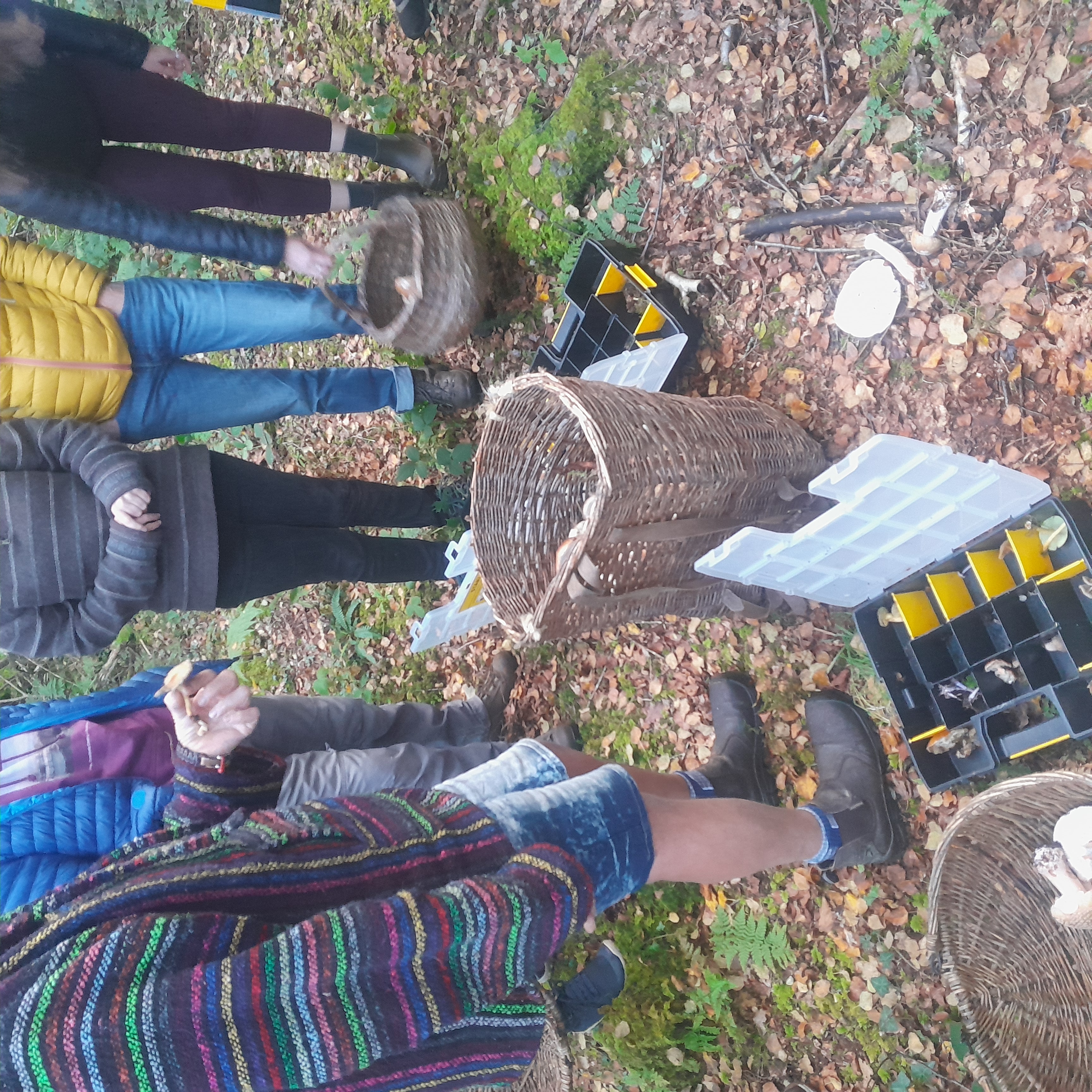
- Stem butts saved from your own harvests or from wild harvested mushrooms
Materials and Equipment
Materials
- Plain cardboard (2-ply or more corrugated is ideal; avoid glossy print or heavy inks)
- Hot water (boiling)
Equipment
- Large pot
- Plastic bag (food-grade or clean recycling bag)
- Sharp knife or scissors
- Chopping board
- Stapler
- Marker for labelling
Overview of the Process
- Soak the cardboard
- Separate the layers.
- Add sliced stem butts between the corrugated layers.
- Roll the layers into a “burrito”.
- Wrap in a thicker outer layer.
- Incubate until fully colonised.
Step-by-Step: The Cardboard Burrito Technique
We will describe the process of making cardboard from “stem butts” (the base of the stem) but it is essentially the same process whatever the course of the mycellium.
1. Soak the Cardboard
Submerge the cardboard in clean water overnight. This softens the fibres and makes it easier to separate the layers. If the layers aren’t separating easily pour boiling water over it. Cover and leave for 30 minutes or so to cool. Now drain thoroughly and the cardboard should be damp but not dripping.
3. Separate the Layers
Peel apart the cardboard.
Set aside one thicker outer layer—this will be used later as the “wrap”.
Use the softer inner corrugated layers.
4. Prepare the Mushroom Material
Take your stem butts, be sure these are from fresh healthy looking mushrooms.
Slice thinly or snip into small pieces with scissors. A little soil or debris from the substrate it was growing on doesn’t matter.
5. Build the Layers
Lay out a sheet of the corrugated inner layer of cardboard.
Distribute the stem butt pieces evenly across it.
Add another sheet on top.
Repeat until you have several layers that can be rolled comfortably.
6. Roll the Burrito
Roll the inoculated cardboard layers into a cylinder. Not too loose and not too tight.
Wrap this roll with the thicker outer layer you set aside earlier.
7. Bag and Label
Place the wrapped roll into a plastic bag.
Fold the top over once and staple—do not seal completely.
Mycelium needs a small amount of air exchange.
Label the bag with species and date.
8. Incubation
Keep at around 20°C.
If contamination is a concern, begin incubation at a slightly lower temperature (15–18°C).
Leave for 1–3 weeks depending on species.
Once the cardboard is uniformly white, the spawn is ready.
Using Your Cardboard Spawn
Once fully colonised, cardboard spawn can be used to inoculate a fruiting substrate. The substrate will depend on the species you are cultivating.
Tips for Success
- Avoid cardboard with heavy printing, wax coatings, or strongly glue sections.
- Ensure the cardboard is damp bit not waterlogged.
- Keep incubation temperatures moderate; high temperatures encourage mould.
- If the roll dries out during colonisation, lightly mist the inside of the bag.
- Use more stem butts for faster colonisation.