
Mushroom cultivation is becoming increasingly popular, but could our enthusiasm for growing fungi be putting wild fungal populations at risk? A recent paper by researchers at Cardiff University and their collaborators raises some important questions about the ecological consequences of introducing cultivated fungi into natural environments.
Fungi are finally beginning to receive some of the attention they deserve. Their importance to healthy ecosystems is increasingly recognised, while interest in mushroom cultivation, mycorrhizal fungi and fungal applications in agriculture and conservation continues to grow.
But there is a potential problem. In our enthusiasm to put fungi to work, are we overlooking the consequences of introducing unfamiliar species and strains into existing ecosystems?
A paper published as a preprint in February 2026, Stranger danger: emerging biosecurity risk from fungus inoculation and cultivation, explores precisely this question.
Written by Matthew Wainhouse, Jassy Drakulic, Rich Wright and Professor Lynne Boddy, the paper highlights an emerging conservation concern: the accidental or deliberate introduction of non-native fungi, including unfamiliar genetic strains of species already present in Britain.
The paper is a scientific commentary drawing together existing research and proposing preventative measures, rather than reporting the results of a new field experiment. It has been made publicly available as a preprint and has not yet been confirmed as peer-reviewed.
Read the paper – Stranger danger: emerging biosecurity risk from fungus inoculation and cultivation
What’s the problem?
We are already familiar with the ecological problems caused by introducing non-native plants and animals. Japanese knotweed, grey squirrels and signal crayfish are well-known examples of species that have spread beyond their original ranges, sometimes with serious consequences for native wildlife.
Fungi are no different in principle, although their introductions have received considerably less attention.
Commercial mushroom cultivation frequently uses species or strains originating from other parts of the world. These fungi may escape into the environment through outdoor cultivation, discarded growing substrates or the release of spores.
One example highlighted in the paper is the Golden Oyster Mushroom (Pleurotus citrinopileatus), a species native to Asia that is widely cultivated for food. It has established populations in North America, where its spread has raised concerns about competition with native wood-decaying fungi.
But there is another, less obvious problem.
Even when we cultivate a species that occurs naturally in Britain, the strain we are growing may have originated somewhere entirely different.
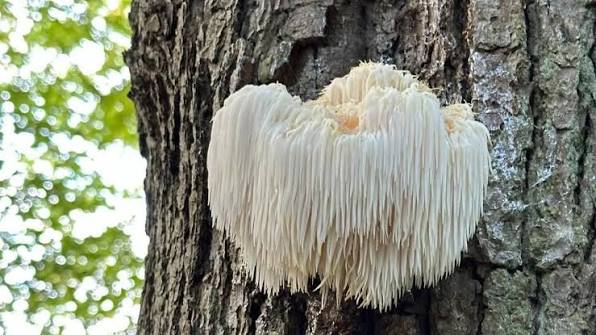
Take Lion’s Mane (Hericium erinaceus), for example. This distinctive fungus occurs naturally in British woodlands, where it is rare and protected. However, cultivated Lion’s Mane is often produced using commercial strains of uncertain or overseas origin.
If these strains establish themselves in the wild, they could potentially compete with native populations or interbreed with them, altering their genetic makeup.
The extent to which this is already happening remains poorly understood, but the authors argue that we should not wait until serious problems emerge before taking preventative action.
What about mycorrhizal fungi?
Another concern is the increasing use of commercial mycorrhizal inoculants.
Mycorrhizal fungi form close associations with plant roots, helping plants acquire nutrients and, in some circumstances, improving their establishment and resilience.
They are increasingly used in horticulture, forestry and ecological restoration. However, commercial inoculants frequently contain fungal strains whose geographical origins are poorly documented.
Introducing these fungi into existing ecosystems may alter native fungal communities. In some circumstances, introduced fungi can compete with indigenous species, and there is no guarantee that adding mycorrhizal fungi will improve plant growth.
The paper therefore asks an important question: before introducing fungi into an ecosystem, shouldn’t we first establish whether they are needed and what consequences their introduction might have?
What do the researchers recommend?
The paper calls for stronger guidance, regulation and cooperation between scientists, conservationists and mushroom growers.
Its principal recommendations include:
- Using native, locally sourced strains: Where fungi are deliberately introduced outdoors, preference should be given to responsibly sourced and verified native strains.
- Containing non-native cultivated fungi: Non-native species and strains grown for food or medicinal purposes should be cultivated in contained indoor facilities, with appropriate treatment of spent growing substrates.
- Improving traceability: Commercial fungal inoculants should clearly identify the species they contain and their geographical origins.
- Protecting existing fungal communities: Mycorrhizal inoculation should only be undertaken where there is a demonstrated need, with priority given to protecting indigenous fungi.
- Monitoring fungal introductions: Researchers, growers and volunteer recorders should cooperate to identify and monitor potentially invasive fungi.
- Establishing native fungal culture collections: Universities, scientific institutions and mushroom cultivators should collaborate to develop a decentralised collection of native fungal strains, with reliable records of their origins.
This last recommendation is particularly interesting.
Rather than discouraging mushroom cultivation, the authors recognise that the growing community of fungal cultivators could make a valuable contribution to conservation by helping to preserve, propagate and study native fungal diversity.
What does this mean for Coed Talylan and the Reffwngiwm?
At Coed Talylan, mushroom cultivation and woodland conservation have been closely connected for many years.
We have been growing mushrooms, teaching cultivation techniques and experimenting with the ecological applications of fungi for over a decade.
More recently, through the development of the Reffwngiwm, we have been working towards a more explicitly fungi-centred approach to woodland conservation.
Our project brings together practical woodland restoration, fungal biodiversity recording, public engagement and research into the ecological roles of fungi.
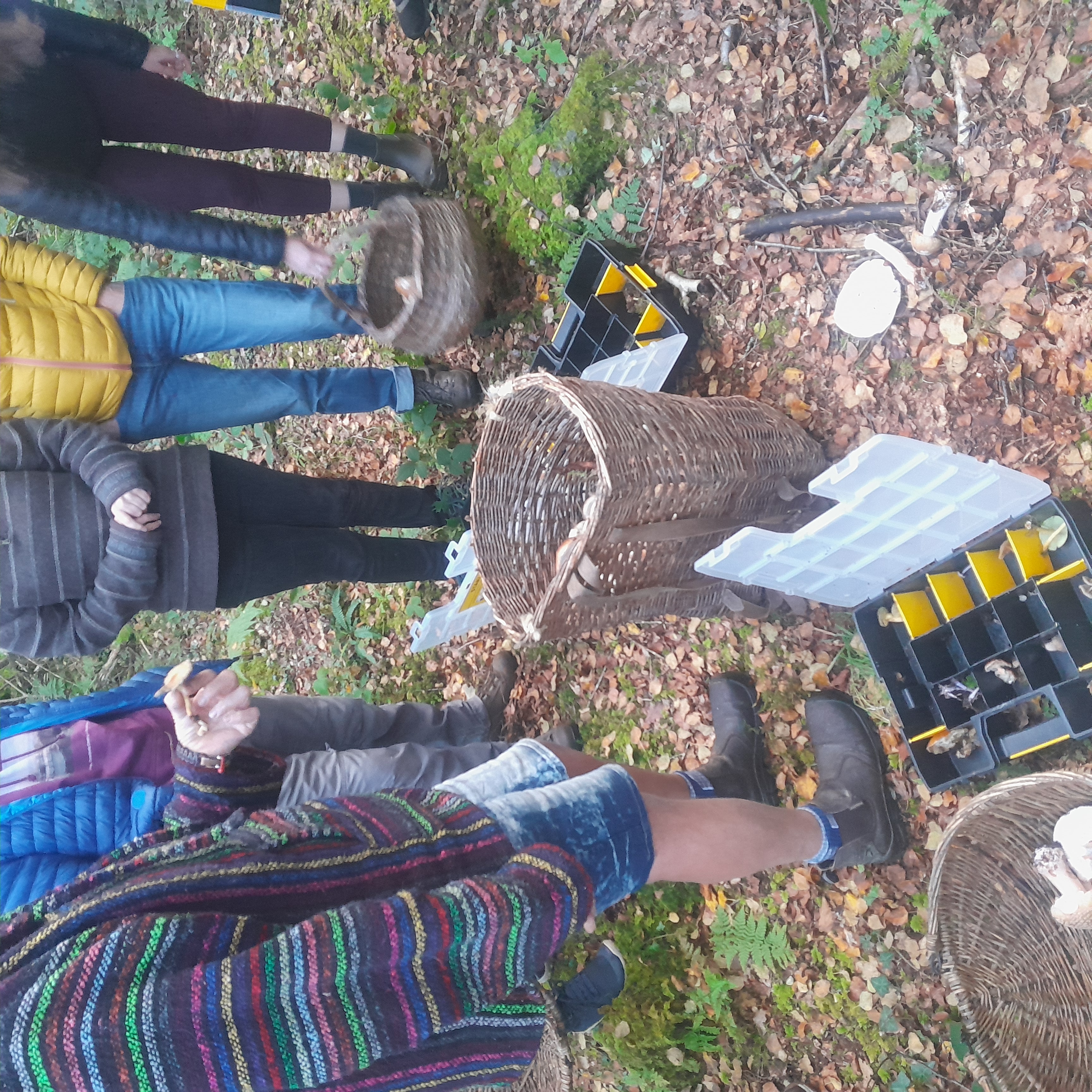
Through our regular Mushroom Mondays and other fungal forays, volunteers are helping us identify and record the fungi present in our woodland. We are gradually building a picture of the diversity of species inhabiting the site, particularly those associated with woodland soils, living trees and decaying wood.
We are also developing a native tree nursery, with a particular interest in the role of mycorrhizal fungi in tree propagation and woodland restoration.
Our aim is to investigate how locally sourced fungi might be used to improve the establishment of native trees, while protecting the existing fungal communities of the landscapes into which those trees will eventually be planted.
The concerns raised in Stranger danger are therefore directly relevant to our work.
They also present an opportunity to think more carefully about the relationship between fungal cultivation and conservation.
How could we contribute?
We would like to see the Reffwngiwm develop as a place where practical mushroom cultivation, community participation and scientific research can come together to support fungal conservation.
There are several areas where we believe we could make a useful contribution.
Developing a collection of native fungal cultures
We are particularly interested in the paper’s proposal for a decentralised collection of native fungal strains.
With our existing cultivation experience and laboratory equipment, we would like to explore how we could contribute to collecting, isolating and maintaining appropriately sourced native fungal cultures.
Such work would need to be undertaken with suitable permissions, reliable identification, clear provenance records and appropriate scientific guidance.
Investigating locally sourced mycorrhizal inoculants
Our developing myco tree nursery offers an opportunity to explore whether locally sourced mycorrhizal fungi can improve the establishment of native trees.
We are interested in comparing different approaches to inoculation, monitoring their effectiveness and investigating how they influence existing fungal communities.
An important part of this would be establishing when inoculation is beneficial and when allowing naturally occurring fungi to colonise trees might be the better approach.
Monitoring fungal biodiversity
Our woodland restoration programme provides opportunities for long-term monitoring of fungal communities.
Through regular surveys, specimen identification and collaboration with experienced mycologists, we hope to develop a more detailed understanding of how woodland management and restoration influence fungal biodiversity.
Working with researchers and conservation organisations
We would welcome opportunities to collaborate with Cardiff University’s fungal ecology researchers and other organisations working towards these goals.
In particular, we would be interested in exploring whether our cultivation facilities, woodland site and volunteer network could contribute to research into native fungal cultures, responsible inoculation and fungal biodiversity monitoring.
We recognise that conservation cultivation requires more than simply growing fungi successfully. Understanding their origins, genetic diversity and ecological relationships is equally important.
Towards a more thoughtful approach to fungal conservation
Fungi have enormous potential to contribute to ecological restoration, sustainable food production and healthier landscapes.
But their growing popularity also brings responsibilities.
The central message of Stranger danger is not that we should stop cultivating fungi or exploring their ecological applications. Rather, it is that we need to approach these activities with the same ecological care that we increasingly apply to the movement and introduction of plants and animals.
For us at Coed Talylan, this is an important reminder that conserving fungi means protecting not only individual species but also their genetic diversity, ecological relationships and the communities they form.
We hope the Reffwngiwm can make a small but meaningful contribution to this emerging field, combining practical cultivation skills with scientific research and community involvement.
We would be delighted to hear from researchers, conservation organisations and fellow mushroom cultivators interested in developing these ideas together.
Further reading
Wainhouse, M., Drakulic, J., Wright, R. & Boddy, L. (2026). Stranger danger: emerging biosecurity risk from fungus inoculation and cultivation. ARPHA Preprints.
Cardiff University (2026). A plan to save endangered fungi. An introduction to Cardiff University’s new research programme developing conservation action plans for 12 threatened British fungal species.